Saturn and Melancholy
Any photographer will tell you that dust has a double-edged relation to the camera. It must be kept well away from the equipment but it is deeply photogenic. Floating in the air, dust motes catch the light, and settle on hard surfaces as a soft glow. There is also something universal about dust. We come from it, go to it, and create it daily with all the inevitability of breathing, and dying. –David Campany, A Handful of Dust, 2017
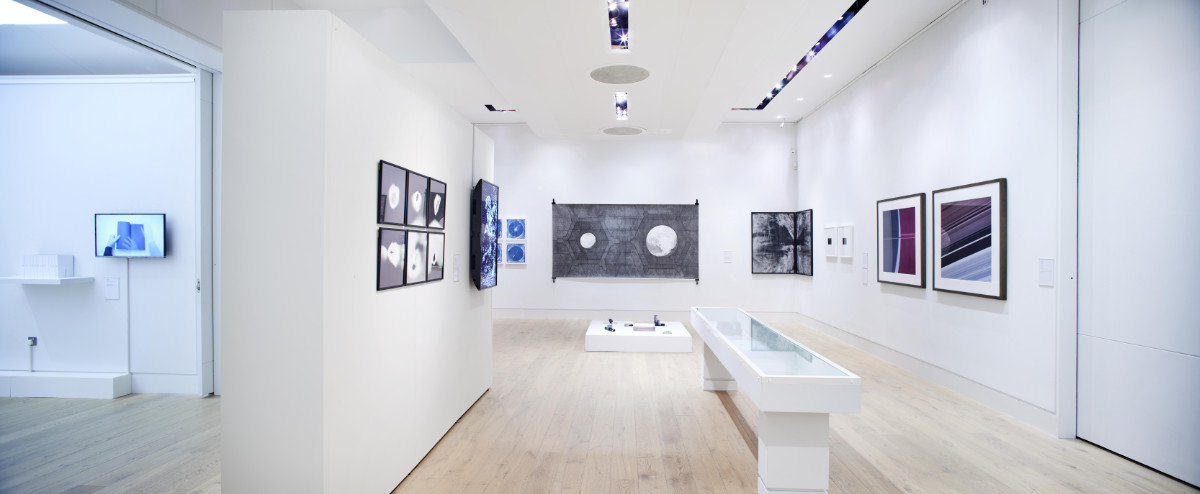
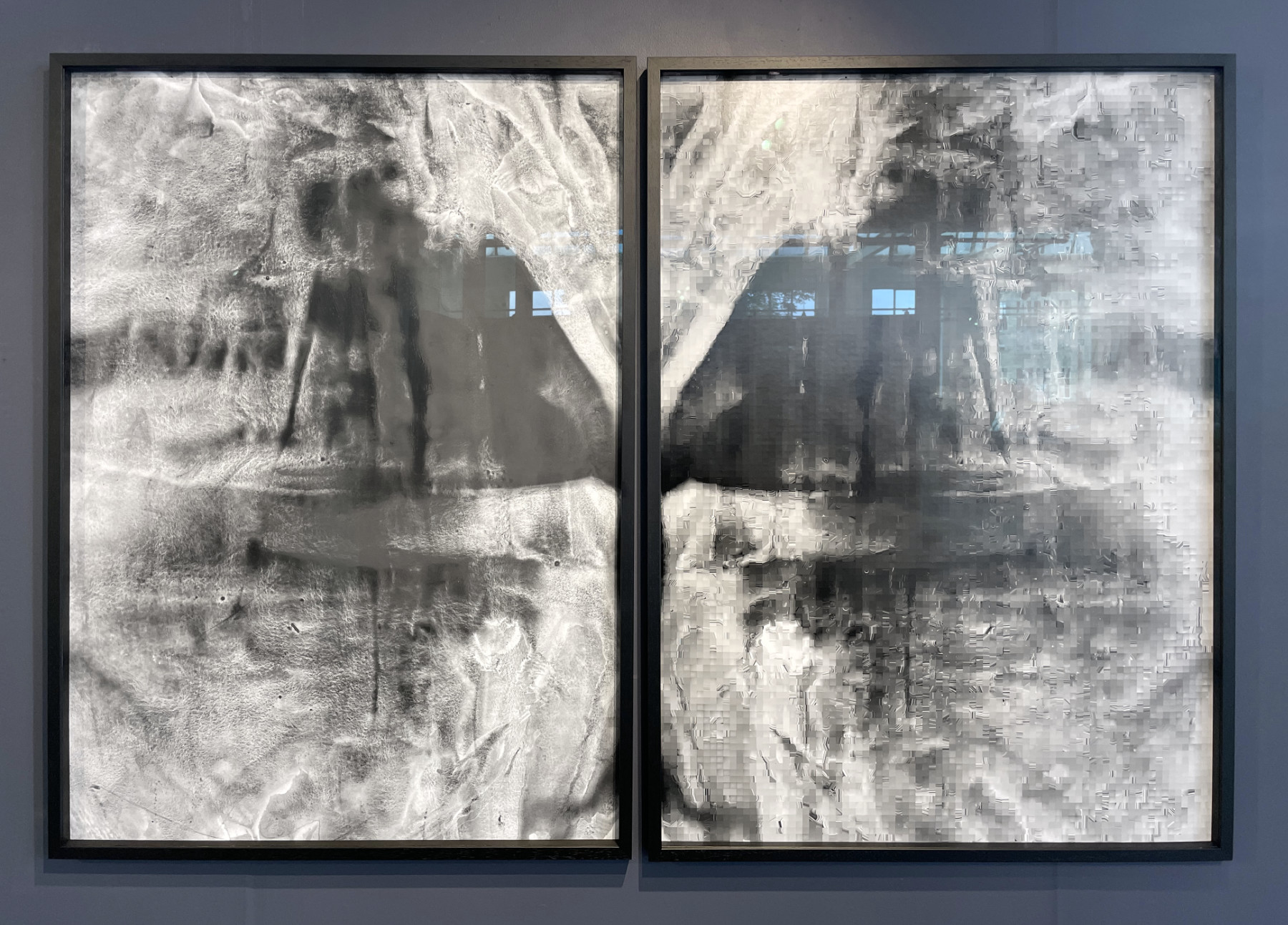
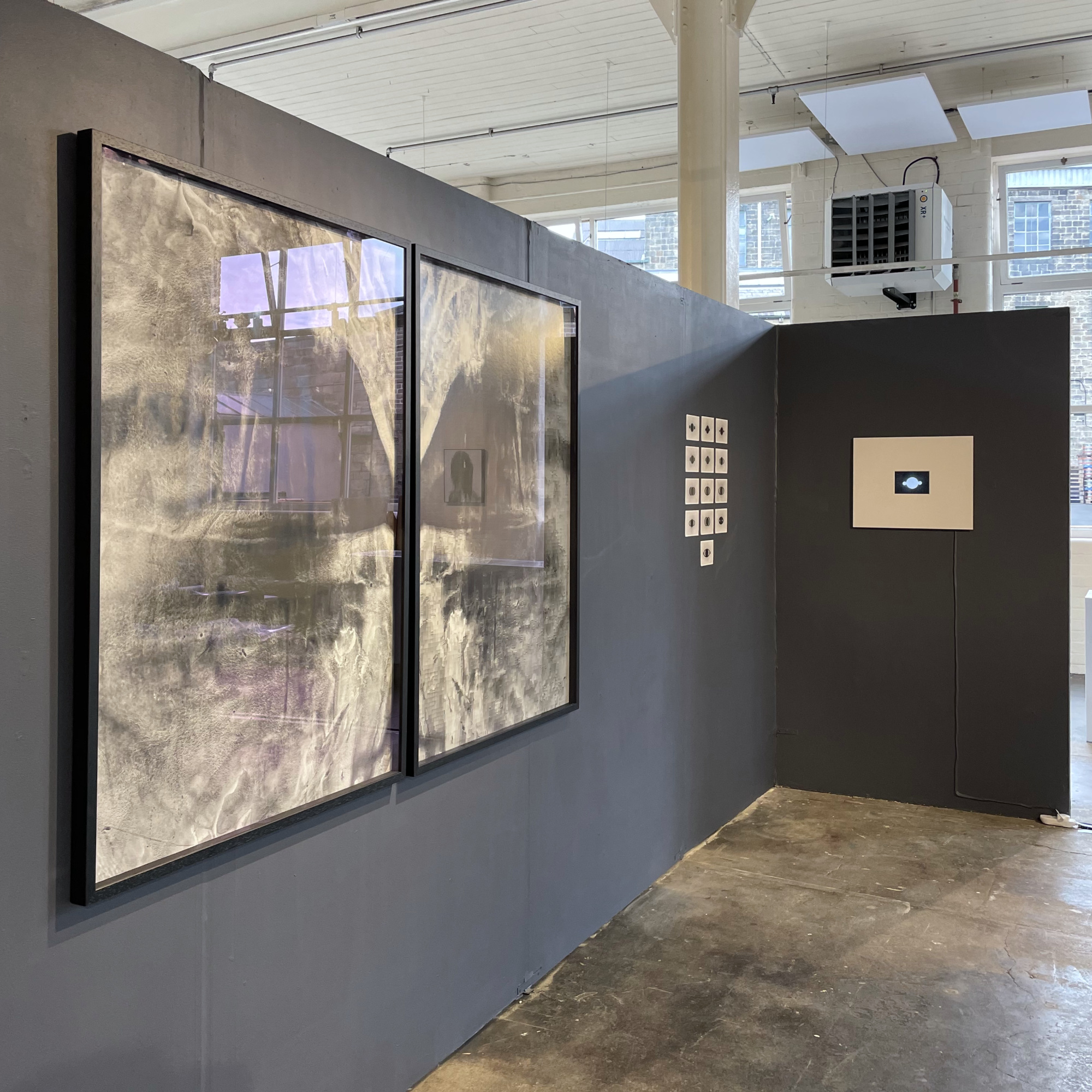
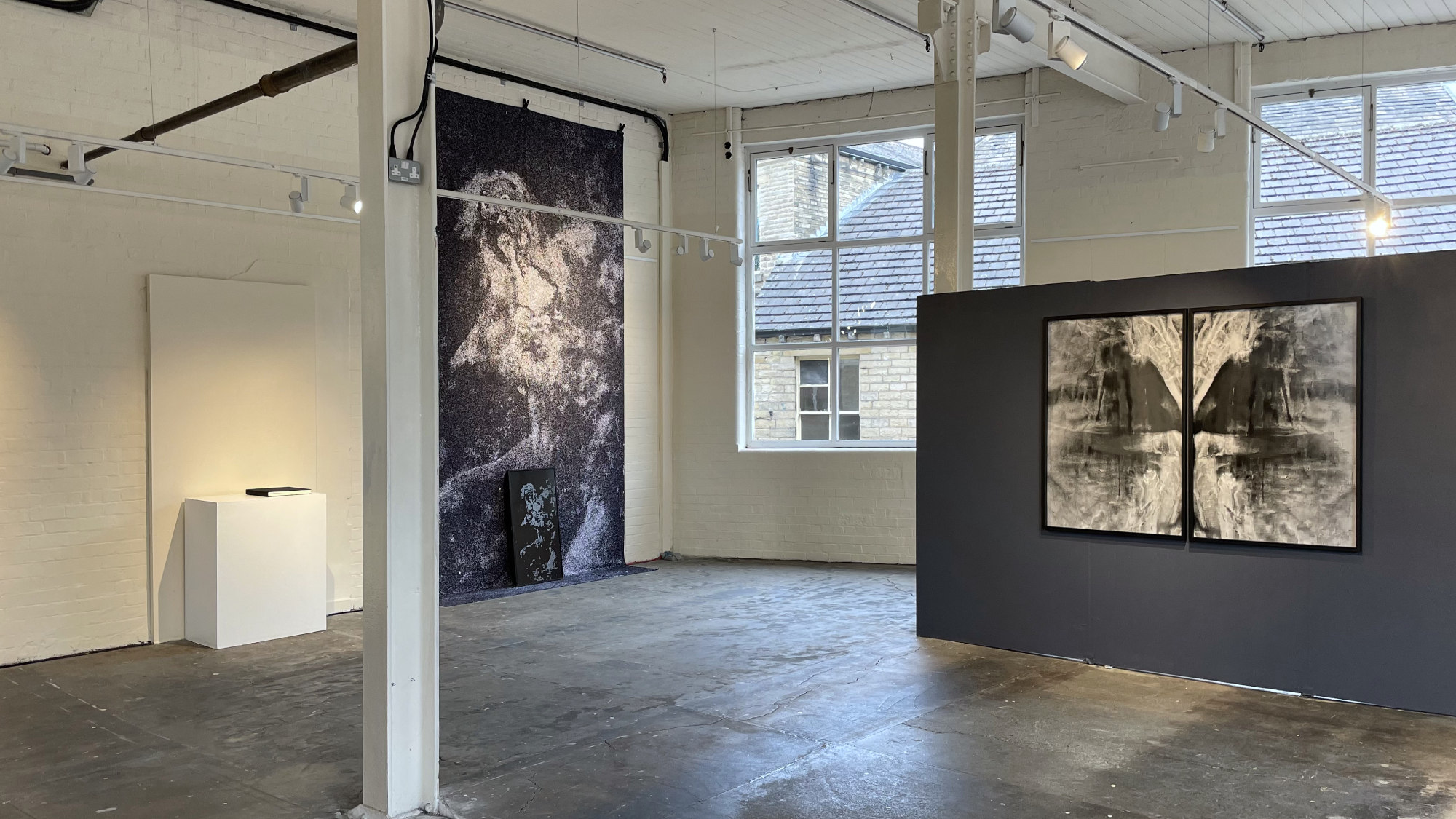
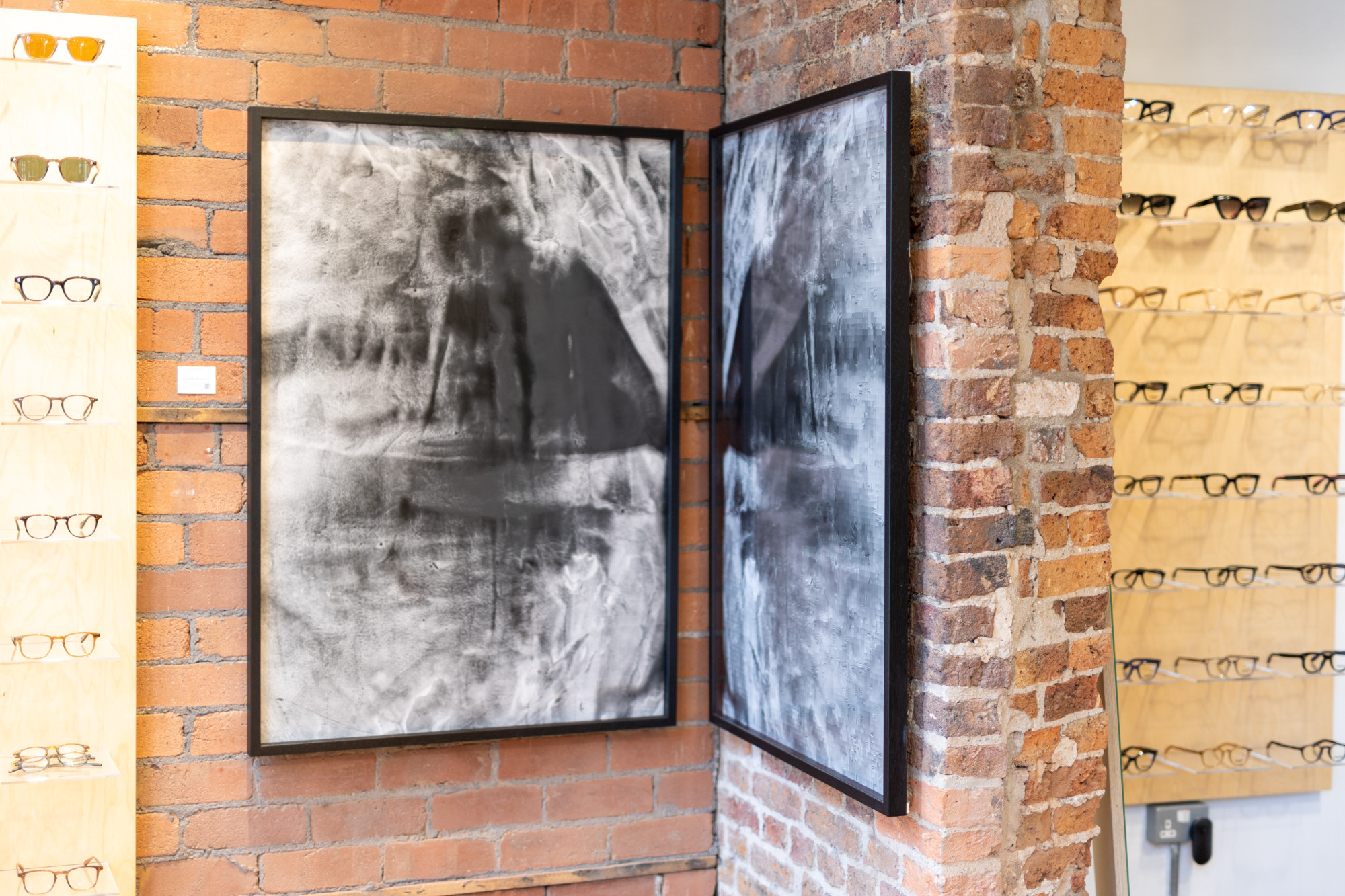
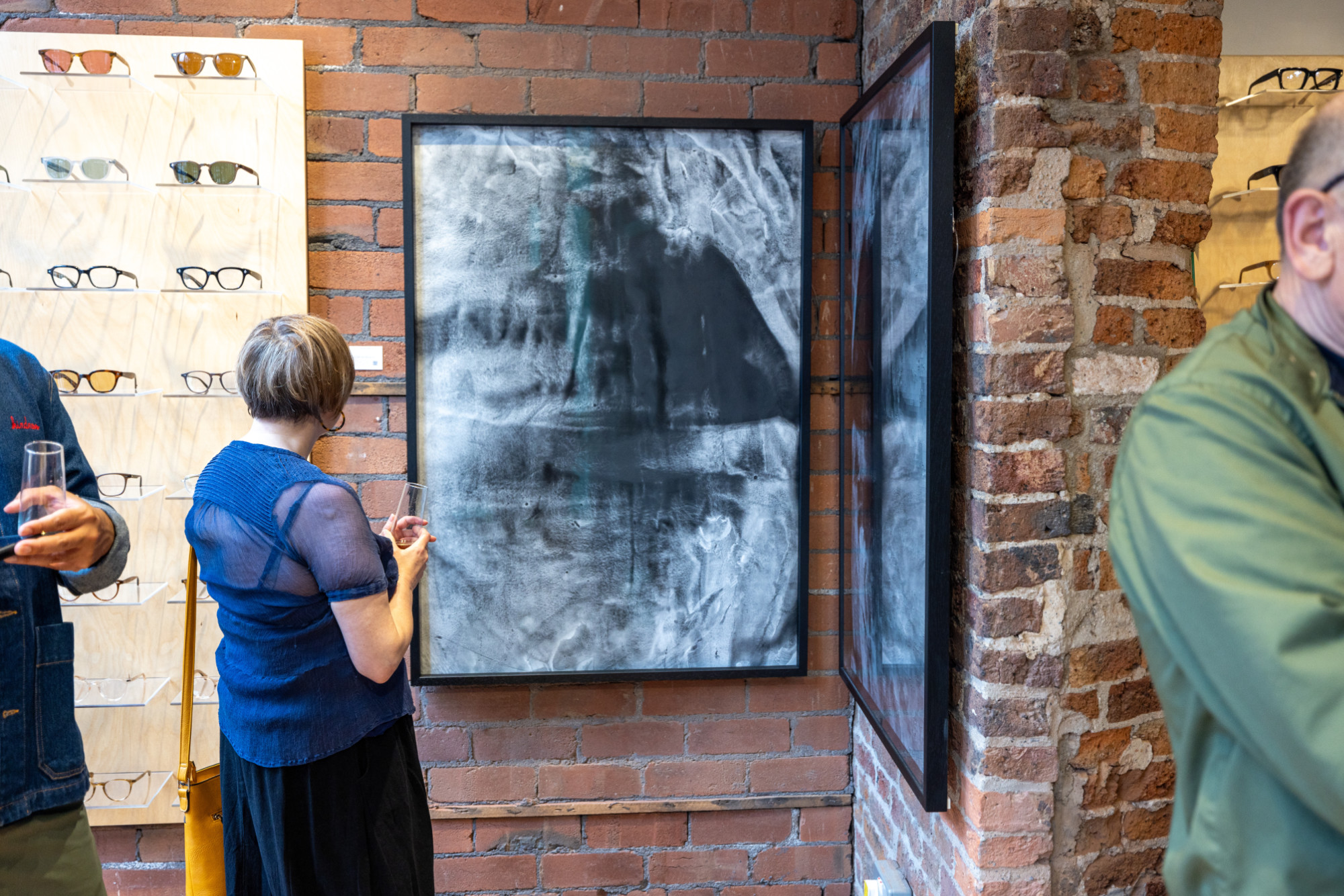
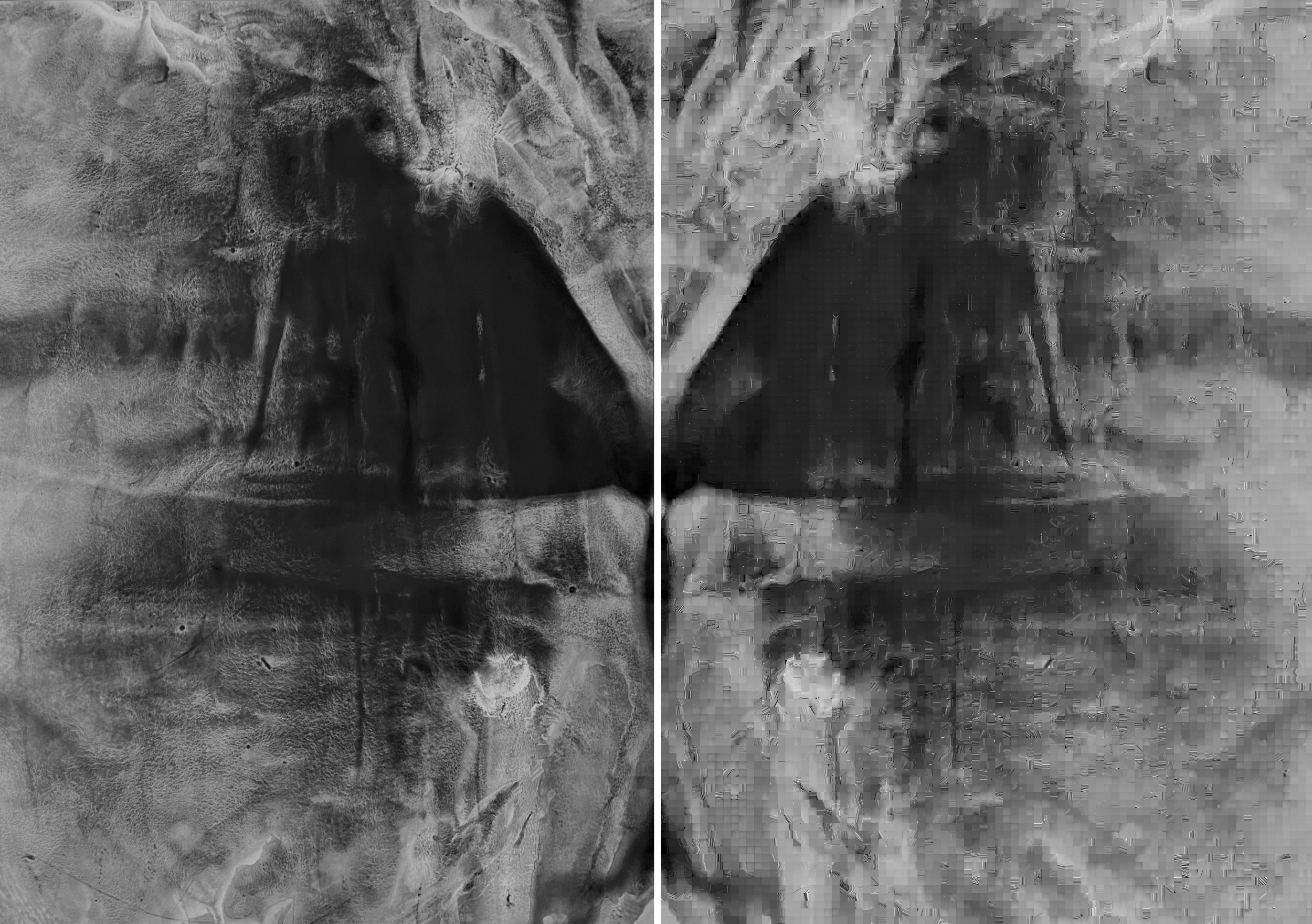
Saturn and Melancholy is a diptych. One panel presents an abstract composition made by scattering and fixing graphite dust onto paper. The other is a photographic reconstruction of the first, composed from thousands of raw photographs of Saturn taken by the Cassini spacecraft. Though produced through very different processes, the two panels are tethered through mirroring and symmetry. From a distance they appear almost identical, like a giant Rorschach blot; only on closer inspection do their differences emerge. Dust operates as both material and metaphor, suggesting cosmic origins as much as erosion, disappearance and the passage of time.
This work was developed as part of Uncalibrated, my PhD practice-led research responding to the unprocessed images from the Cassini mission to Saturn. The Cassini raw images are public and can be found here.