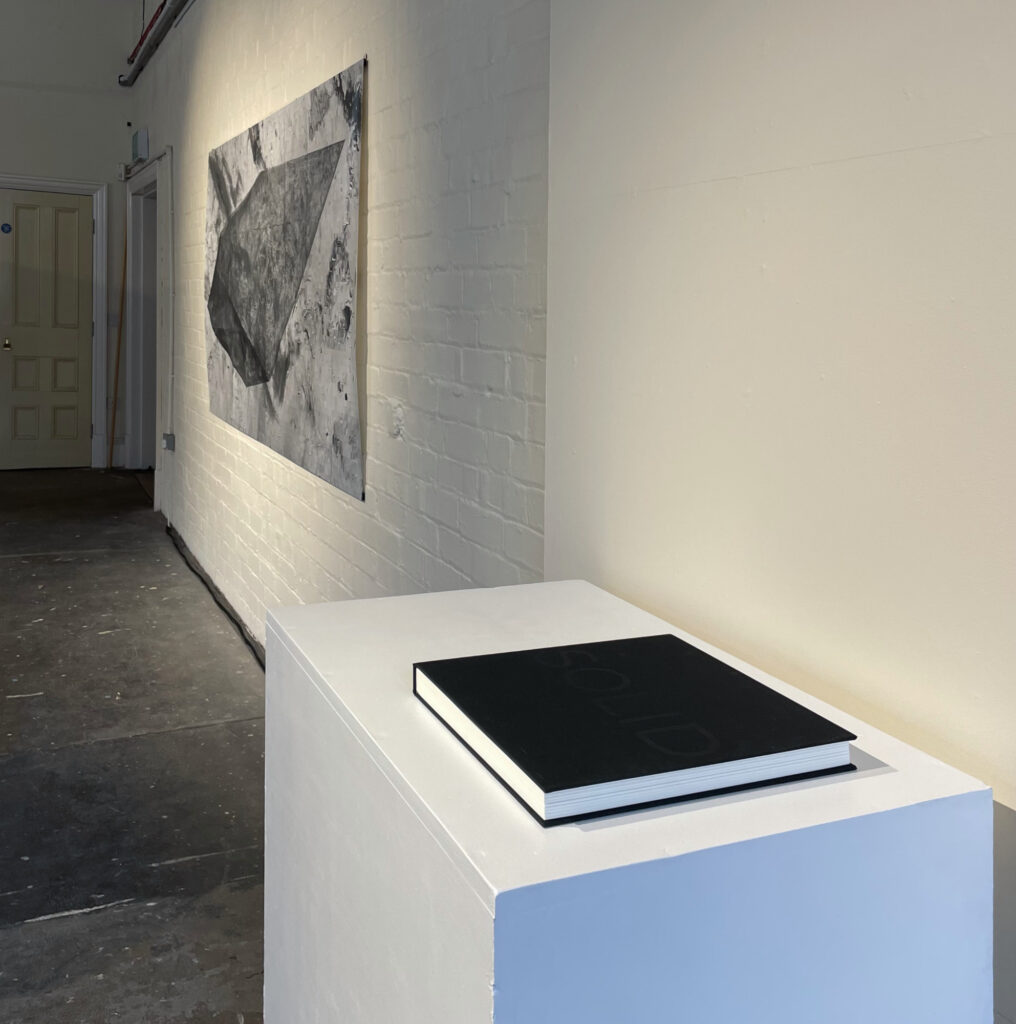
Solid
Isn’t melancholia a kind of intimacy with objects that cannot be fully grasped or understood? Doesn’t melancholia ensue as the result of interaction with such opaque things? Could the polyhedron be described as radiating its own melancholy? […] It is as if the polyhedron is an instance of geometry gone wrong, an obstacle to clear thinking, and symptomatic of a space that is not possible for the melancholic, or the viewer for that matter, to escape. – Andrea Bubenik, The Persistence of Melancholia in Arts and Culture, 2019
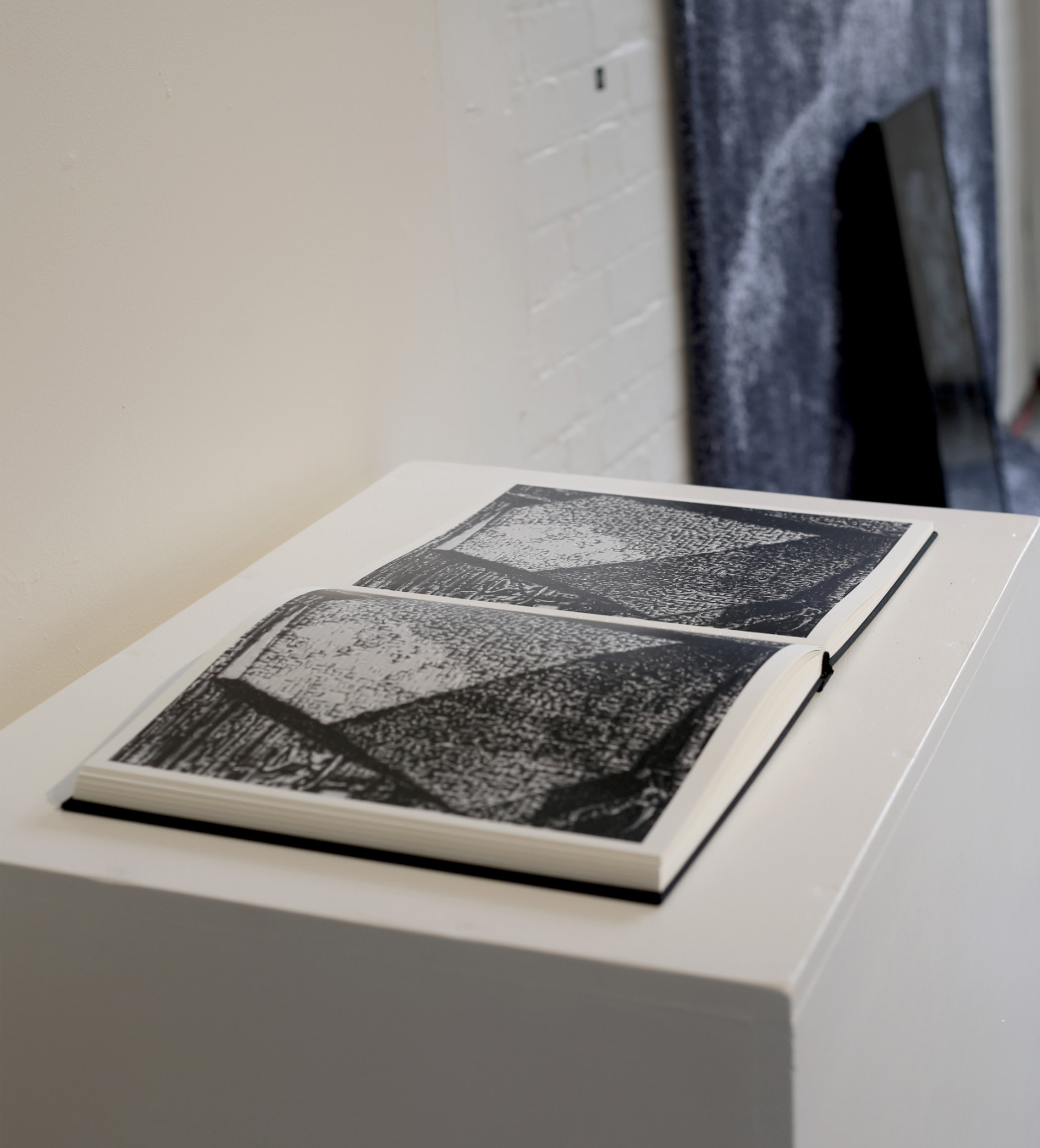
This work is an exploration of melancholy, perception, and the instability of meaning. A hardback artist’s book made entirely of images. Each page presents a photomosaic of the same target image — Albrecht Dürer’s enigmatic polyhedron in his etching Melencolia I (1514) — constructed from NASA’s Cassini raw image archive. The sequence begins with a single Cassini image, then expands systematically: a 2×2 grid, 3×3, 4×4, and so on, until the software runs out of images. As the mosaics grow denser, the image of the polyhedron comes into focus only to decay again, because every Cassini image is used only once.
The title, blind-embossed on the cover, refers to Dürer’s polyhedron as a symbol of melancholy, both material and unstable, an object that resists ever being fully seen. The book format is integral: its sequential turning of pages slows down the act of looking, passing the control of duration onto the reader, and requiring tactile engagement. In Solid, the book embodies its role as a traditional repository of knowledge while simultaneously unraveling the reliability of images. Part of my PhD research Uncalibrated.