Miramientos
The eye is not a passive camera that records the world but an organ that experiences it. As such, it always distorts, invents, blurs, and bends, and our perception of the world is only ever an approximation that the body imagines. – Anthony Huberman, At The Edge of Things (exhibition catalogue), Pace Gallery, 2019
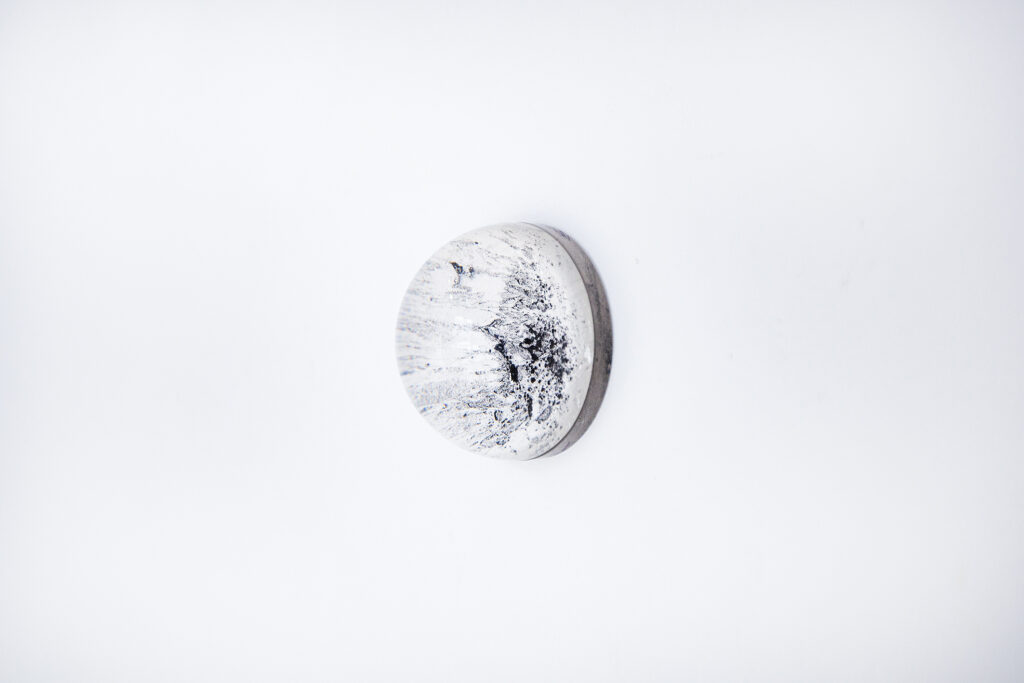
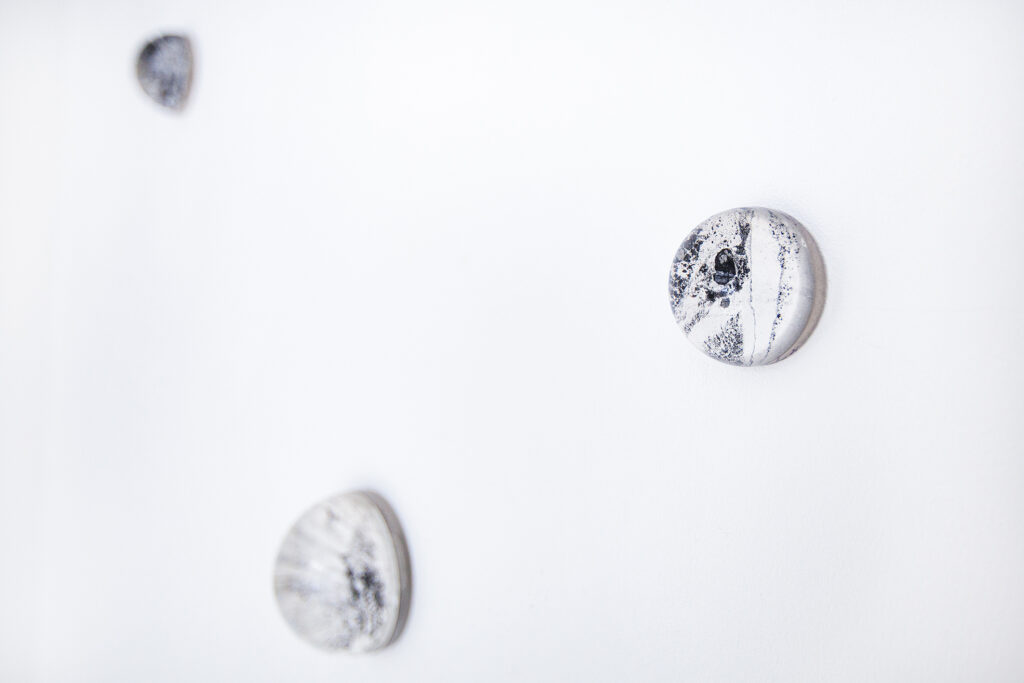
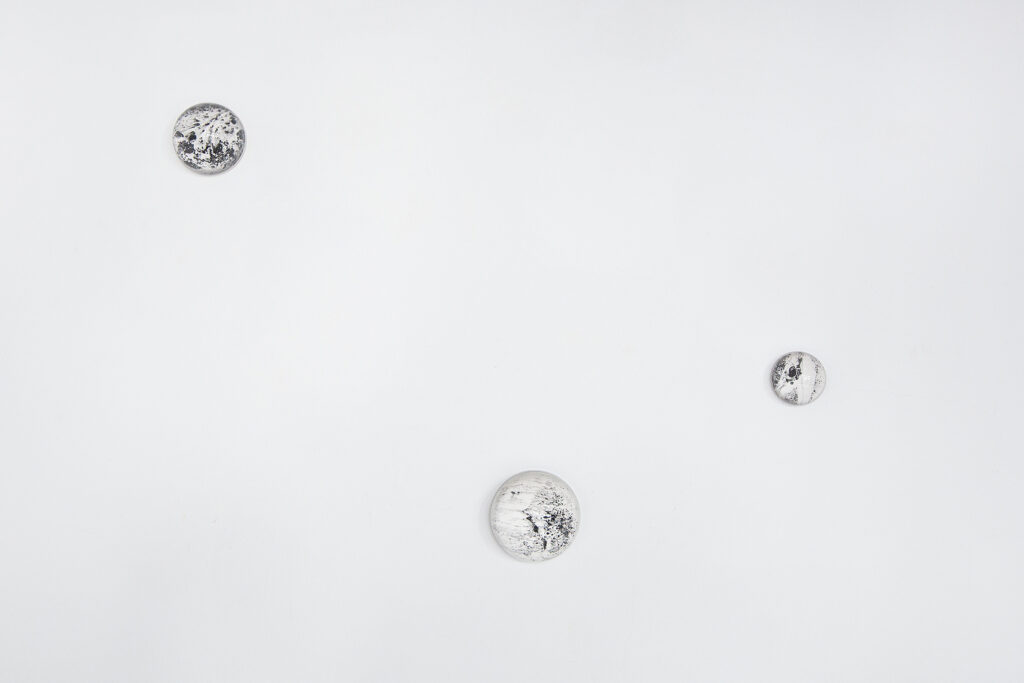
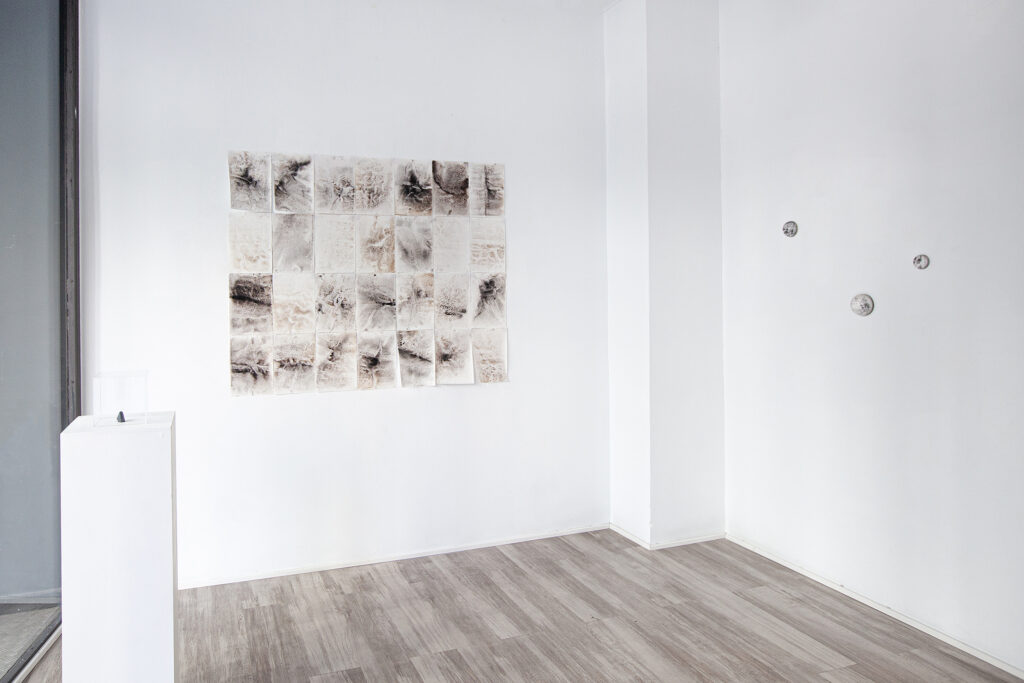
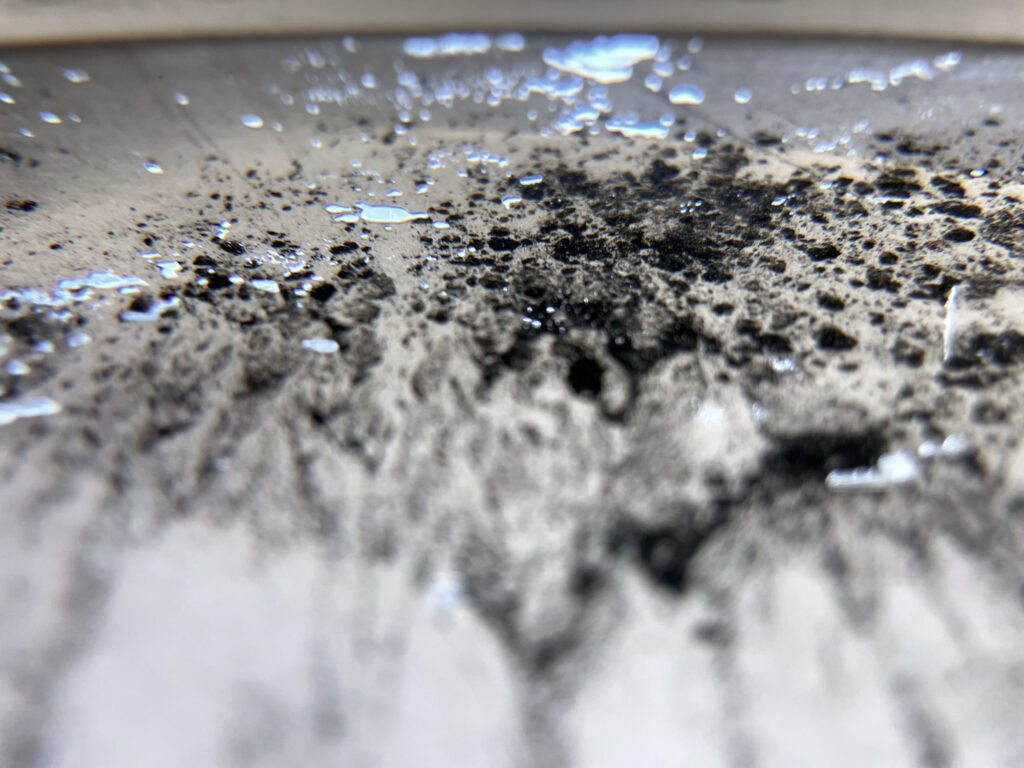
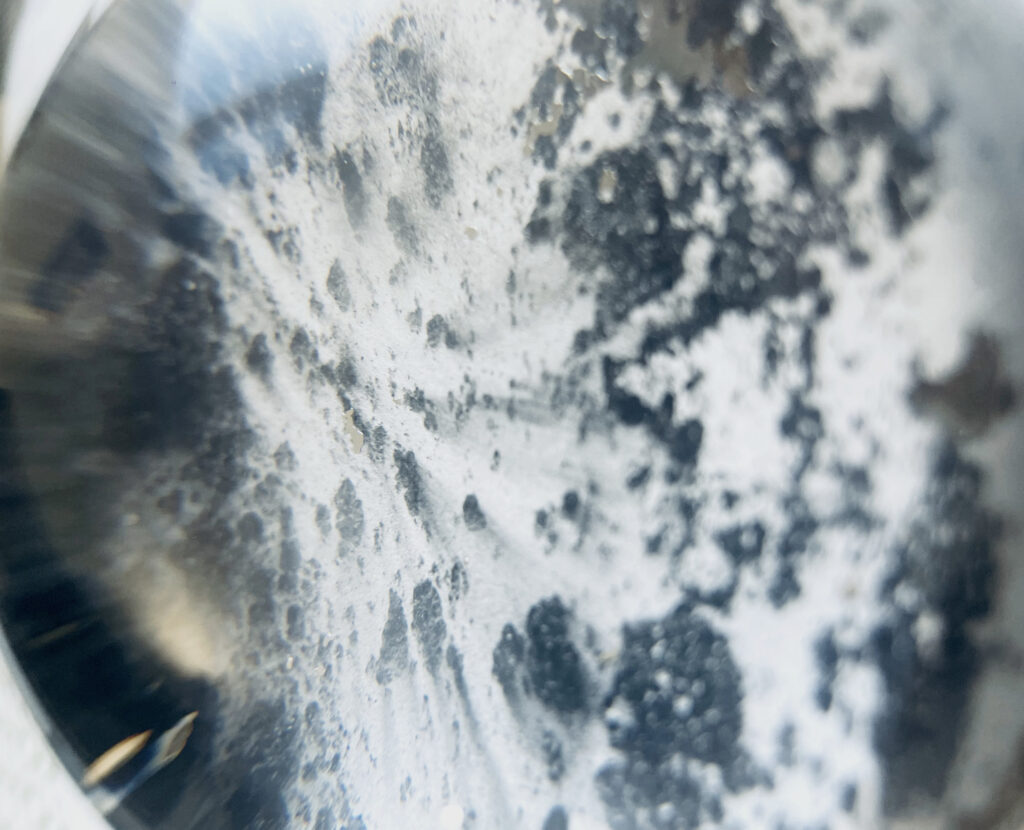
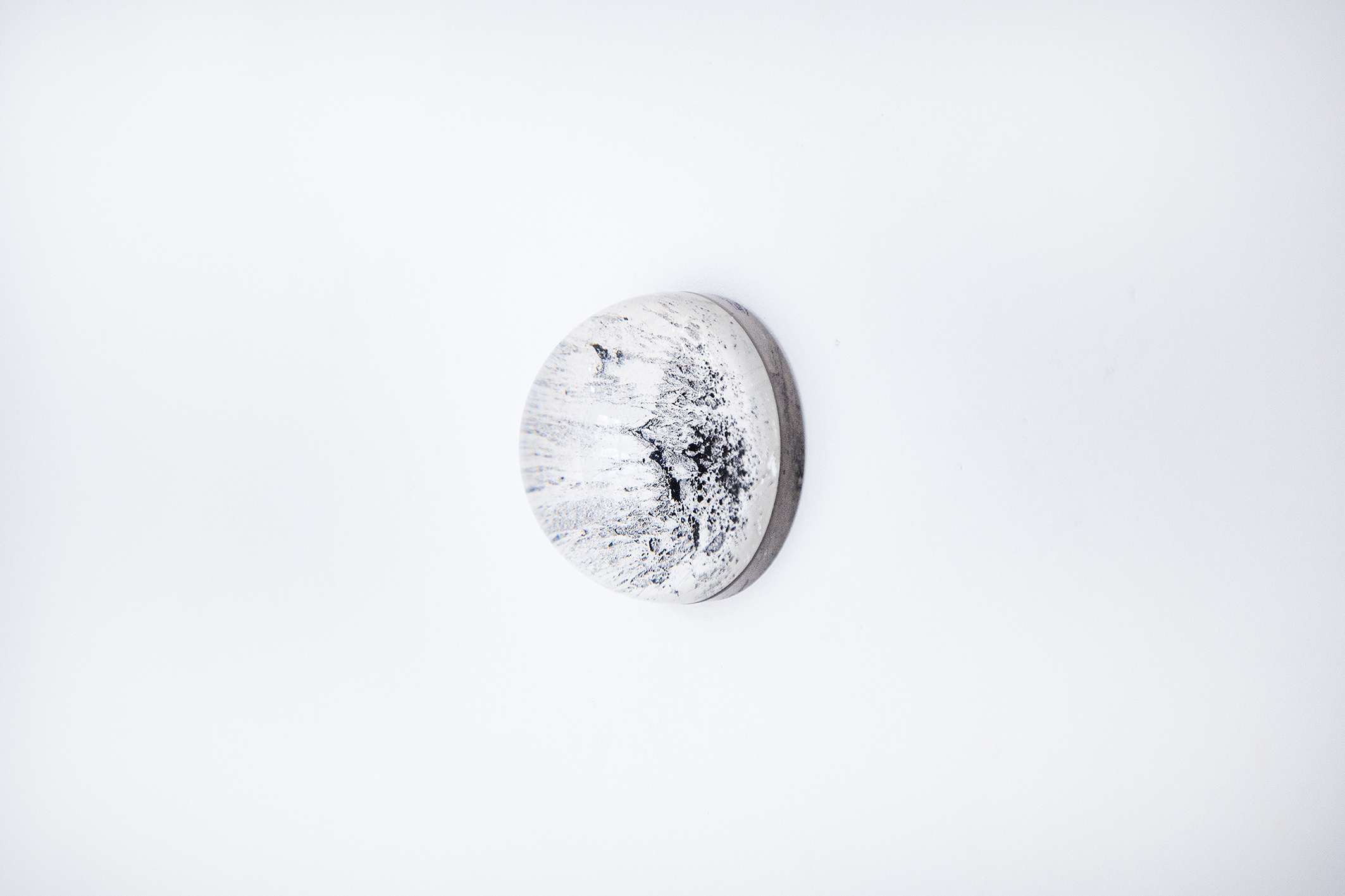
Drawings encapsulated beneath glass domes. Made with powdered graphite, each invites a slow, intimate and necessarily partial way of looking. The work draws on the story of Percival Lowell and his maps of the supposed canals of Mars, as well as the imaginative projections that early planetary images inspired among nineteenth-century astronomers. The circular format evokes both celestial spheres and the vitreous body of the eye — an organ that filters, and sometimes distorts, the reality it seeks to apprehend. The glass dome becomes both protective cover and optical device, turning the act of viewing into a small experiment in perception; the lens’s reflections and subtle distortions become part of the drawings’ suggested rocky, sedimentary and fractured terrains.
Miramientos is a Spanish word related both to the act of looking (mirar means “to look”) and to a form of careful, almost excessive attention. The subtitle (Regolith) refers to the layers of fragmented material that cover planetary surfaces. Here, the term also points to the accumulation of traces, residues and projections that mediate every act of observation.